
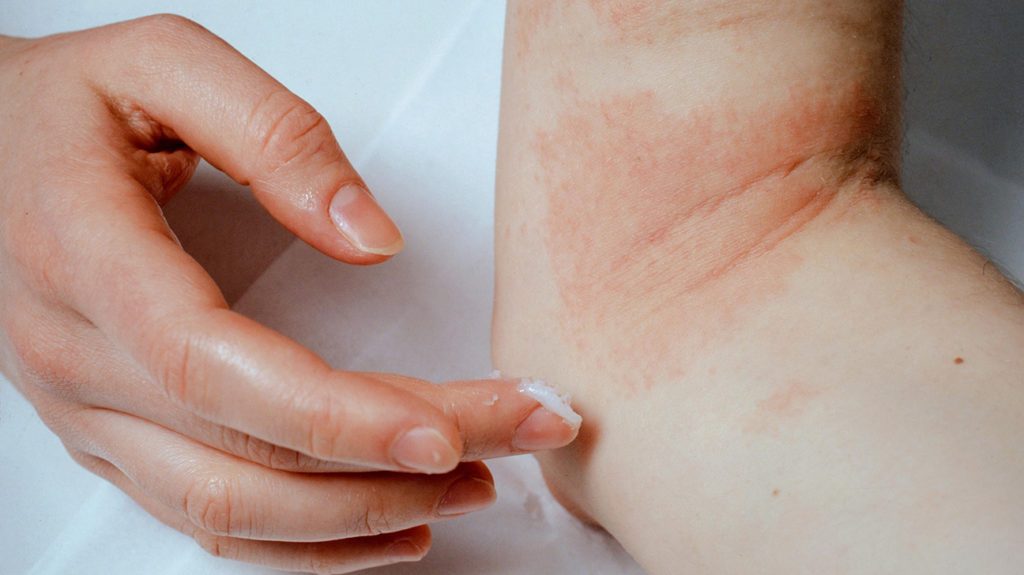
Atopic dermatitis is one of the most common forms of eczema, especially in children. The exact cause of atopic dermatitis is not known, but researchers believe it may involve genetics, the environment, and/or the immune system.
Eczema symptoms include itchy, red, and dry skin caused by inflammation. It’s most commonly found in children, although adults can get it. When people talk about eczema, they usually mean atopic dermatitis, its most common form. But eczema is actually the name for a group of skin conditions. They all cause red, itchy, and often cracked skin. On babies it is usually on the scalp and cheeks. In children it is most often seen inside the elbows and behind the knees. In adults it often on hands, eyelids and under the eyes. This post will be addressing the most common form of eczema, atopic dermatitis.
Conventional Treatments
No lab test is needed to identify atopic dermatitis (eczema). Your doctor will likely make a diagnosis by examining your skin and reviewing your medical history. He or she may also use patch testing or other tests to rule out other skin diseases or identify conditions that accompany your eczema.
If you suspect a certain food caused your rash, tell the doctor and ask about identifying potential food allergies.
Atopic dermatitis can be persistent. You may need to try various treatments over months or years to control it. Even if treatment is successful, signs and symptoms may return (flare).
It’s important to recognize the condition early so that you can start treatment. If regular moisturizing and other self-care steps don’t help, your doctor may suggest one or more of the following treatments:
Medications
Creams that control itching and help repair the skin. Your doctor may prescribe a corticosteroid cream or ointment. Apply it as directed, after you moisturize. Overuse of this drug may cause side effects, including thinning skin.
Other creams containing drugs called calcineurin inhibitors — such as tacrolimus (Protopic) and pimecrolimus (Elidel) — affect your immune system. They are used by people older than age 2 to help control the skin reaction. Apply it as directed, after you moisturize. You will be advised to avoid strong sunlight when using these products. These drugs do have a black box warning about a potential risk of cancer.[1a] Use with caution.
Oral drugs that control inflammation. For more severe cases, your doctor may prescribe oral corticosteroids — such as prednisone. These drugs are effective but can’t be used long term because of potential serious side effects. The Food and Drug Administration (FDA) has recently approved a new, injectable biologic (monoclonal antibody) called dupilumab (Dupixent). It is used to treat people with severe disease who do not respond well to other treatment options. This is a newer medication, so it doesn’t have a long track record in terms of how well it helps people. Studies have shown it to be safe if used as directed. It is very expensive.
Therapies
Wet dressings. An effective, intensive treatment for severe atopic dermatitis involves wrapping the affected area with topical corticosteroids and wet bandages. Sometimes this is done in a hospital for people with widespread lesions because it’s labor intensive and requires nursing expertise. Or, ask your doctor about learning how to do this technique at home.
Light therapy. This treatment is used for people who either don’t get better with topical treatments or who rapidly flare again after treatment. The simplest form of light therapy (phototherapy) involves exposing the skin to controlled amounts of natural sunlight. Other forms use artificial ultraviolet A (UVA) and narrow band ultraviolet B (UVB) either alone or with medications.
Though effective, long-term light therapy has harmful effects, including premature skin aging and an increased risk of skin cancer. For these reasons, phototherapy is less commonly used in young children and not given to infants. Talk with your doctor about the pros and cons of light therapy.
Natural Treatments
Current research shows that eczema is at least partially an allergic disease:
- Serum IgE (one of the classes of antibodies) is elevated in 80 percent of patients.
- All patients have positive allergy (skin and RAST) tests.
- Two-thirds of eczema patients have family members who also have eczema.
- Many eventually develop hayfever (allergic rhinitis) and/or asthma.
- Most improve on a diet which eliminates common allergenic foods. [1]
Diet – Whole foods diet is highly beneficial along with identification and avoidance of foods to which you may have an allergy or sensitivity. It doesn’t need to be a full blown allergy to cause eczema. Main culprits are wheat and dairy. Try an elimination diet. Keep a food diary. Excess consumption of fruit, especially citrus and sour, may aggravate symptoms.
Nutritional Supplements – A protocol combining specific supplements, herbs and natural topical treatments has been shown to have good results when combined with a whole foods diet and eliminating responsible allergens such as wheat and dairy, soaps, laundry detergents, indoor air pollution such as tobacco smoke, toxic cleaning products, mold or pollen. Most of the following recommendations come from The Encyclopedia of Natural Medicine by Dr. Michael Murray and Dr. Joseph Pizzorno. These are all adult doses. As symptoms improve, you may slowly reintroduce suspected allergenic foods. Wean off gradually and assess progress. You may need to stay on a low dose to keep symptoms at bay.
- Vitamin A, 25,000 IU daily.
This is a high dose for short term use, not longer than one or two months.
This is because there is always a chance of vitamin A toxicity with oral supplementation of the vitamin. However, most eczema patients also suffer from gut/digestive issues and, therefore, have impaired fat absorption coupled with low vitamin A absorption. Daily RDA is recommended at 3000 IU for males and 2330 IU for females.
When a person is deficient in vitamin A, the skin is particularly vulnerable to hyperkeratinisation (thickening of the skin), as is commonly found in eczema. Vitamin A is critical to the proper development and maintenance of the skin. Vitamin A can help kill off pathogens on the skin and also boost the immune system. Therefore, vitamin A deficiency can lead to a slow decline of skin health. One of the symptoms of this deficiency is dry, scaly skin.
- Vitamin D, 1600 IU daily. Supplementation with at least 1600 IU has been clinically shown to decrease eczema severity.[2] [3] Vitamin D and also vitamin A are fat soluble vitamins, which means they can build up in the body. It would be wise to know your levels. Talk to your healthcare provider. For those with mild symptoms and wanting to take low level dosing of Vitamin A and D, Cod Liver Oil provides both vitamins along with anti-inflammatory essential fatty acids. Many liquid products are now flavored and are actually quite tasty. Personally I have not suffered with eczema, but I have been taking 1 Tablespoon of Cod Liver oil daily for about 2 years. My dry, itchy skin that appears every year during the colder months, has disappeared. Also, my vitamin D level is in a healthy normal range at 42 (ng/ml). Normal is 30-100.
- Vitamin E, 400 IU daily (mixed tocopherols). Clinical studies have shown improvement in itching, extent of lesions and SCORAD index improvement. (SCORAD is a clinical tool used to assess the extent and severity of eczema. (SCORing Atopic Dermatitis) As vitamin E has no side effects with a dosage of 400 IU/day, it can be recommended for the treatment of atopic dermatitis. [4]
- Vitamin C, 500 mg daily. Vitamin C is an ascorbic acid, that helps improve the formation of collagen in our skin. It helps to heal wounds faster and works as a natural antihistamine that destroys the imidazole ring of the histamine molecule (for those of you who like the science-y info).
- Bioflavonoids, 500mg daily. Any food that contains vitamin C also contains bioflavonoids. Bioflavonoids are required for absorption of vitamin C and both work together in the body. Although bioflavonoids are not considered a vitamin, they are sometimes referred to as vitamin P. Bioflavonoids are found abundant in citrus fruit rinds and pulp. Flavonoids may help to scavenge free radicals and stabilize the reactive oxygen species. This can lead to fewer allergic reactions. They may also reduce inflammatory responses that contribute to diseases like asthma and eczema.
- Evening Primrose oil, 2-4 capsules, three times a day. All fats have important roles in the body. The most important fats are the ones that the body can not make and therefore must come from the food we eat. Evening Primrose oil is one such essential fatty acid(EFA). Patients with eczema appear to have an essential fatty acid deficiency or a defect in a zinc-dependent (see below) enzyme involved in essential fatty acid metabolism. This results in decreased synthesis of the anti-inflammatory prostaglandins. Treatment with evening primrose oil both normalizes the EFA abnormalities and relieves the symptoms of eczema.[5] It is also important to increase the dietary intake of fish oils (eicosapentaenoic acid, EPA), either by eating more fatty fish (like mackerel, herring and salmon) or supplementation. Fish oils have significant anti-inflammatory and anti-allergy effects by inhibiting arachidonic acid metabolism.[6] To promote healing, you can also pierce the capsule of Evening Primrose Oil and apply directly to cracks and sore areas, such as elbows and behind the knee.
- Zinc, 50 mg daily. Decrease as condition clears. Zinc deficiency is common in eczema. It is most likely helpful due to the fact that it is necessary for the enzyme that produces hydrochloric acid in the stomach and for the conversion of fatty acids to anti-inflammatory prostaglandins (natural chemicals in the body with hormone-like qualities). Take with food.
- Flax Seed Oil, 1 teaspoon three times a day. Rich in alpha-linolenic acid (ALA). Here are those essential fatty acids again! They play a crucial role in skin health. It can reduce inflammation and ease the symptoms of redness, swelling and itching. [7] It may also lower LDL cholesterol and decrease C-Reactive Protein levels (inflammatory marker in the body).[8]
- Herbs – In traditional medicine, outbreaks on the skin were thought to be the result of impure blood. Herbs that were effective in clearing up these types of conditions were known as blood purifiers. Today we know that these herbs work by improving liver detoxification, aiding lymphatic drainage and otherwise improving the body’s ability to break down toxins and metabolic by-products. BP-X is a traditional blood purifier created by the herbalist Dr. John Christopher. It has been used as a remedy for skin eruptive diseases such as eczema, acne, poison ivy and other miscellaneous rashes. Use in conjunction with a whole foods diet, lots of pure, clean water and other supplements appropriate to your condition. [9] Similar to BP-X, Yogi Detox tea is an enjoyable way to sip your way to healthier skin from the inside out. Adding a few drops of Oregon grape extract will boost the detoxifying properties of your tea time. Oregon grape stimulates the action on the liver and is one of the best blood cleansers according to Louise Tenney, master herbalist and author of Today’s Herbal Health. Oregon grape is for short term use, 2-3 weeks, and not for pregnant or breastfeeding women.
Topical Treatments – Eczema is best treated internally, as the cause is usually a constitutional one. Following the above recommendations can yield great results. There are a few topical items you can use to relieve discomfort and continue promotion of healing with your “internal” program.

Epsom salts can provide anti-inflammatory action. Swelling, pain and itchiness are soothed with an epsom salt bath. [10]
- Evening Primrose oil – Not only is this beneficial taken internally, you can pierce a capsule and apple directly to cracks and sore areas of the skin to promote healing.
- Calendula Cream or Calendula Oil – reduces skin inflammation and soothes itchiness. If intense scratching has led to scars, calendula can also be used to reduce scarring.
- Coconut Oil – Applying coconut oil to the skin has been clinically shown to improve eczema symptoms. [11] It’s main ingredient, lauric acid, helps to soothe the skin, reduce irritation and itching, and lowers the risk for infection. [12]
- Golden Salve – A healing herbal salve. Soothes and moisturizes rough, dry or patchy skin and lips. It is antiseptic, emollient, vulnerary (helps tissues to heal, usually without scarring). Also great for diaper rash!
- Aloe Vera Gel – The antibacterial and antimicrobial effects can prevent skin infections, which are more likely to occur when a person has dry, cracked skin. Aloe’s wound-healing properties may soothe broken skin and promote healing. People can buy aloe vera gel in health stores or online, or they can purchase an aloe vera plant and use the gel directly from its leaves. Choose aloe gel products with few ingredients — some can contain preservatives, alcohol, fragrances or colors, all of which can irritate sensitive skin. Alcohol and other drying ingredients could make eczema worse. Start with a small amount of gel to check for skin sensitivity. Sometimes aloe vera can cause burning or stinging. Generally, however, it is safe and effective for adults and children. [13]
- Last but certainly not least, one of my favorites for all kinds of skin issues. Tallow Balm! You can read **HERE** the research about its wonderful benefits.
Homeopathy – as I’ve stated in other blog posts, homeopathy is a complex science. The particular remedy that works for one person may not work for another. You need to take into consideration the whole person and their symptomology. Rather than list each detailed one, I will post a link HERE for you to read and decide which one best fits how your body manifests the disorder.

When To See Your Doctor
Eczema symptoms range from mild to severe and make you more prone to skin infections. See a doctor if you or your child are experiencing:
Discomfort and pain that keeps you from sleeping or functioning normally
Excessive eczema symptoms even after trying over-the-counter or home treatments
Worsening skin infections — especially if they include pus, red streaks, or yellow scabs
If any or all of these symptoms are accompanied by a fever, seek medical attention immediately.

Follow me on Facebook for the latest researched info on health and wellness!
Sources.
https://medlineplus.gov/indoorairpollution.html
Zile, M.H. and Cullum, M.E., ‘The function of vitamin A: current concepts’, Proc. Soc. Exp. Biol. Med., 1983
https://www.rxlist.com/consumer_vitamin_a_retinol/drugs-condition.htm
https://www.progressivehealth.com/getting-rid-of-eczema.htm
https://vitamedica.com/wellness-blog/vitamin-c-bioflavonoids/
McPherson T. Current Understanding in Pathogenesis of Atopic Dermatitis. Indian J Dermatol. 2016;61(6):649–655. doi:10.4103/0019-5154.193674
https://www.medicalnewstoday.com/articles/323745
http://stevenhorne.com/files/associate/handouts/BP-X.pd


 Naturally Renewed
Leave a comment